
Revolutionizing Mineral Processing: The Ultimate Guide to Dry Air Shaking Tables
In the world of mineral processing and material separation, precision, efficiency, and environmental responsibility are paramount. While traditional wet shaking tables have been an industry standard for decades, they come with a significant drawback: the need for water. Enter the Dry Air Shaking Table (also known as an Air Table or Gravity Separator)—a game-changing technology that delivers high-precision separation without a single drop of water.
What is a Dry Air Shaking Table?
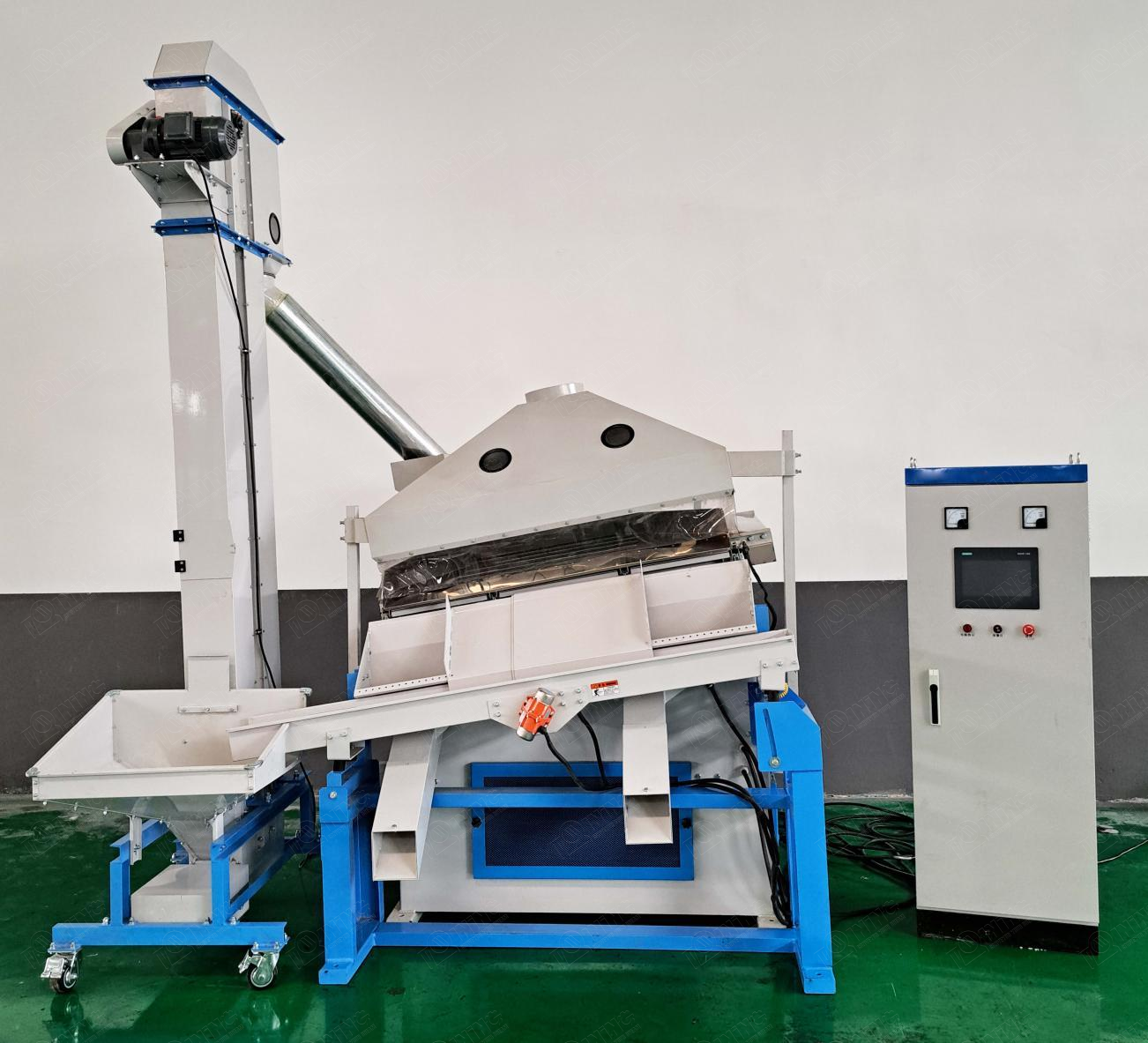
A dry air shaking table is a specialized piece of equipment designed to separate dry, granular, free-flowing particles based on their specific gravity (density) . Unlike conventional wet tables that use water as a medium to create stratification, dry tables use a controlled stream of air forced up through a porous deck .
Think of it as a high-tech "density sorter." It allows you to separate valuable heavy minerals from lighter waste material efficiently, making it an indispensable tool for mining, recycling, and industrial processing in arid regions or environments where water usage is restricted or unavailable.
How Does It Work? The Science of Air Separation
The magic of the dry air table lies in the synergy between mechanical vibration and pneumatic fluidization . The process can be broken down into four key steps:
Material Feed: The dry, granular material is fed onto one corner of a slightly tilted, porous deck.
Fluidization & Stratification: Fans force air upward through the perforated deck. Simultaneously, the deck is shaken laterally (from side to side) at a high frequency (typically 200 to 600 cycles per minute) . The upward air pressure lifts the particles, causing the bed of material to "fluidize." As the particles become buoyant, the denser, heavier particles sink down to the deck surface, while the lighter particles float to the top .
Conveyance & Separation: The vibration of the deck moves the particles. The heavier particles travel "up-hill" along the deck's incline towards the heavy mineral discharge. The lighter particles are floated by the air stream and roll "down-hill" and across the deck to the light mineral discharge .
Adjustable Splitting: Adjustable dividers (splitters) at the end of the table allow operators to precisely collect the various fractions, including an optional middlings (mid-grade) product, ensuring a high-purity final product .
Critical Adjustable Parameters
To achieve optimal separation for different materials, dry air tables are highly tunable. Operators can control:
Deck Inclination: The tilt of the table affects how quickly particles travel.
Vibration Frequency & Amplitude: Controls the shaking intensity and particle movement speed.
Air Flow Velocity: Crucial for achieving the right fluidization; too little air and no separation occurs; too much and you blow your product away.
Feed Rate: The volume of material fed onto the table.
Applications: Where is it Used?
The versatility of dry air tables makes them suitable for a wide range of industries and materials:
1. Mining & Mineral Processing
Precious Metals: Efficiently recovers fine gold, silver, and other precious metals from dry placer deposits or crushed ore, especially in water-scarce regions .
Industrial Minerals: Separates valuable heavy minerals like ilmenite, chromite, zircon, and garnet from lighter gangue (waste rock) .
Antimony & Sulfide Ores: Effectively processes sulfide ores like stibnite and pyrite .
2. Recycling & Secondary Materials
E-Waste Recycling: Separates copper wire from PVC insulation and other plastics in shredded electronic scrap .
Non-Ferrous Metal Separation: Used to separate aluminum, copper, and brass from other materials.
Foundry Sand Reclamation: Removes spent binder and fine contaminants from used foundry sand, allowing the sand to be reused.
3. Agriculture & Food Processing
Grain Cleaning: Removes stones, unfilled seeds, chaff, and other impurities from rice, wheat, coffee, and other grains to achieve a high-purity product .
4. Other Industrial Applications
Plastic Separation: Sorting different types of mixed plastics (e.g., PET from PVC) by density.
Slag Processing: Recovering valuable metals from smelter slag.
Advantages of Dry Air Shaking Tables
Waterless Processing: The single greatest advantage. It operates 100% dry, making it environmentally friendly and ideal for arid and water-restricted areas. No settling ponds or water treatment are required.
Low Operating Costs: Besides electricity and routine wear parts, there are no water pumping and treatment costs. It operates with a small footprint and simple dust collection system.
High Efficiency: Capable of processing up to 7 tons per hour depending on the model and material, with excellent separation efficiency exceeding 95% in many applications .
Minimal Fines Loss: Unlike wet tables where very fine valuable particles (<325 mesh) can be lost into the tailings water, air tables often retain these fines.
Limitations to Consider
While powerful, dry air tables are not a universal solution.
Feed Preparation is Critical: The feed material must be completely dry (moisture can cause clumping) and of a consistent, narrow particle size range . It is generally not effective for sticky or non-flowing materials .
Dust Generation: Since it uses air, dust is inherent. A proper dust collection system (baghouse or cyclone) is an essential ancillary requirement.
Conclusion
The dry air shaking table is a sophisticated, efficient, and environmentally conscious tool for density-based separation. By eliminating the need for water, it opens up new possibilities for mineral processing and recycling in challenging environments. Whether you are a small-scale miner looking to recover gold from dry placer deposits, a recycler processing e-waste, or a large industrial mineral processor, the air table offers a powerful, water-free solution to achieve high-purity products.
Have a specific material in mind? Contact us today for a feasibility test on your sample.