Introduction
In the world of gold mining and mineral processing, few pieces of equipment are as fundamental to operational success as the ball mill. Whether you are developing a new gold processing plant, expanding an existing operation, or simply looking to optimize your grinding circuit, understanding the capabilities and selection criteria of ball mills is essential to achieving high recovery rates and profitable production.
Ball mills are the workhorses of gold ore grinding circuits, transforming run-of-mine ore into a fine slurry that can be effectively processed through leaching, flotation, or gravity concentration. This article provides a comprehensive overview of ball mill applications in gold processing plants, including selection criteria, emerging technologies, and best practices for optimization.
Why Ball Mills Are Critical in Gold Processing
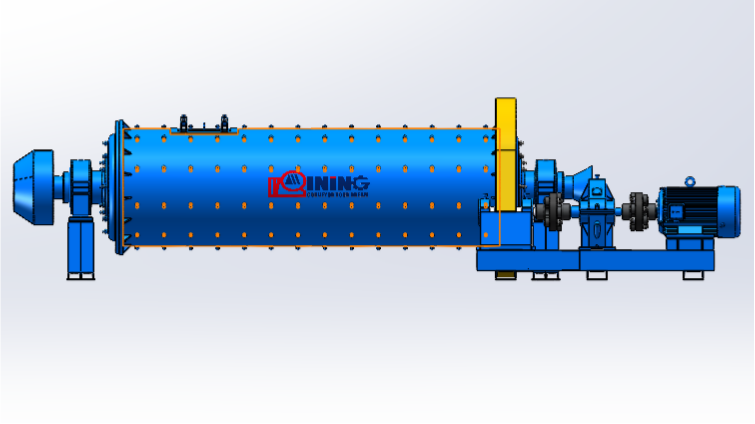
Gold ore, by its nature, is often finely disseminated within host rock. To liberate the gold particles from the surrounding gangue material, the ore must be ground to a specific fineness—typically 80% passing 53 to 75 microns (200-270 mesh) depending on the mineralogy and downstream process. Ball mills are uniquely suited to this task, offering the ability to achieve consistent, fine grind sizes essential for maximizing gold recovery.
The Grinding Circuit
A typical gold processing plant grinding circuit consists of a ball mill operating in closed circuit with a hydrocyclone cluster. The mill receives feed from the crushing circuit, grinds it to the target particle size, and discharges a slurry that is classified by cyclones. Oversize particles are returned to the mill for further grinding, ensuring a consistent product size.
Modern gold plants increasingly utilize a SAG (Semi-Autogenous Grinding) / Ball mill combination, where the SAG mill performs primary grinding and the ball mill handles secondary grinding. This configuration offers flexibility, high throughput, and excellent overall grinding efficiency.
Key Considerations for Ball Mill Selection
Selecting the right ball mill for a gold processing plant requires careful evaluation of several factors:
1. Production Capacity
Capacity is the most fundamental selection parameter. For smaller operations (e.g., 60 TPD), a compact model with a processing capacity of 1-5 tons per hour is typically recommended. For larger plants processing 100+ TPD, larger mills with higher power ratings are required. As a general guideline:
Φ900×1800 or Φ1200×2400 models are common for smaller to medium-scale gold operations.
Φ1500×5700 mills handle 3.5-6 tons per hour.
Φ2200×7000 mills can process 15-28 tons per hour with 380 kW power.
2. Ore Characteristics
The grindability of the ore, measured by the Bond Ball Mill Work Index, is a critical factor. Higher work index values indicate ore that is harder to grind, requiring more power and larger mill capacity. Typical gold ores have work indices ranging from 16 to 23 kWh/t. Harder ores may require ceramic grinding media or specialized liner designs to maintain efficiency.
3. Grinding Media
The choice of grinding media significantly impacts both operating costs and grinding efficiency.
Steel balls remain the industry standard, with optimized ball size distribution improving mineral liberation.
Ceramic balls (nano-composite ceramic balls) have shown remarkable results in recent studies, achieving 34.90% reduction in power consumption per ton and 56.67% reduction in ball consumption with constant ore throughput.
Mixed media (ceramic + steel balls) can achieve 2.8% higher grinding fineness and 0.3% higher gold recovery while saving approximately 1.31 million yuan annually in ball consumption.
4. Mill Liners
Liner design and material selection directly affect mill performance and maintenance costs.
Alloy steel liners are traditional but heavy.
Rubber liners have been adopted in many gold plants, reducing liner weight by two-thirds while narrowing the variation in liner life.
Modern liners with optimized structures improve grinding capacity—one gold plant achieved an increase from 900 t/d to 1,200 t/d through liner and discharge device modifications.
Emerging Technologies and Trends
The ball mill landscape is undergoing significant transformation driven by digitalization, sustainability imperatives, and the quest for more precise comminution processes.
Smart Grinding with AI and Sensors
In 2025, the global metal mining ball mill population exceeded 48,000 units, with 28% penetration of intelligent ball mills equipped with AI-driven predictive systems. These systems use real-time sensors to monitor:
Mill load
Temperature
Vibration
Toe position (critical for optimizing water flow, ore feed, and ball volume)
By integrating these sensors with advanced analytics, operators can maximize throughput, maintain target grind size, and monitor liner wear—directly contributing to higher gold yields and more efficient electricity use.
Ultrafine Grinding for Enhanced Recovery
Research demonstrates that grinding gold ore to P80 ≈ 10μm can increase gold recovery from 75% to over 92%. Emerging technologies such as superfine crushers are producing ultrafine particle sizes historically requiring ball mill grinding, with improved mineral liberation and energy savings.
Sustainability and Energy Efficiency
The mining ball mill market grew from $4.19 billion in 2024 to $4.47 billion in 2025, reflecting a compound annual growth rate of 6.5%. This growth is accompanied by increasing focus on:
Reducing energy consumption through optimized mill design
Lowering media consumption with advanced ceramic materials
Extending mill and liner life through predictive maintenance
Implementing closed-loop water management in grinding circuits
Maintenance and Optimization Best Practices
To ensure long-term, reliable operation of ball mills in gold processing plants, the following practices are essential:
Scheduled Maintenance
Every 400 hours: Supplement steel ball ratio
Every quarter: Replace liner bolt anti-loosening gaskets
Annual inspection: Main bearing clearance should be maintained at 0.15-0.20mm
Process Optimization
Monitor cyclone performance: Keep concentration deviation under 3% and fineness deviation under 5%
Adjust grinding parameters: Use real-time sensors to dynamically adjust water flow, ore feed, and ball volume
Optimize liner design: Upgrade to rubber liners where suitable to reduce weight and improve mill effective volume
Real-World Applications: Ball Mills in Action
Large-Scale Projects
In 2026, Saudi Arabian mining company Maaden selected Metso to deliver a complete gold processing plant for the Ar Rjum mine, featuring a grinding circuit that includes SAG and ball mills with auxiliary equipment. The €128 million project underscores the continued importance of ball mills in large-scale gold processing.
Expansion Projects
TRX Gold has specified a SAG/ball mill combination for its plant expansion to 3,500+ tons per day, with tendering for the SAG mill underway. This expansion builds on the existing ball mill capacity to maximize throughput and recovery.
Ongoing Optimization
B2Gold's Masbate Project in the Philippines operates a 9.75m diameter SAG mill followed by 9.6 MW of secondary ball milling, with a 2019 expansion that included a third ball mill to increase throughput from 6.5 Mt/a to 8.0 Mt/a.
Conclusion
Ball mills remain the cornerstone of gold ore grinding circuits worldwide, providing the consistent, fine particle sizes essential for effective gold recovery. Whether you are designing a new plant, expanding an existing operation, or simply optimizing your current grinding circuit, selecting the right ball mill—and operating it efficiently—is fundamental to your project's success.
From small-scale operations processing 60 TPD to major mining projects handling millions of tons annually, ball mills offer the versatility, reliability, and performance required to meet today's demanding gold production targets.
Ready to optimize your gold processing plant's grinding circuit?
Contact our team of grinding experts today to discuss your specific requirements—whether you need a new ball mill, are looking to upgrade your current equipment, or want to explore the latest ceramic grinding media and smart monitoring solutions.