
Introduction
Silica sand is one of the most widely used industrial minerals, essential for glassmaking, foundry casting, construction, water filtration, and many other applications. However, raw silica sand often contains excessive moisture—typically ranging from 5% to 15%—which can cause handling problems, reduce product quality, and increase transportation costs. To meet strict specifications, efficient drying is essential. Among the various drying technologies available, the rotary dryer remains the most reliable and cost-effective solution for large-scale silica sand processing.
But selecting the right rotary dryer is not a one-size-fits-all task. The wrong choice can lead to inefficient drying, high energy consumption, excessive dust, or even damaged material. This guide will walk you through the key factors to consider when choosing a rotary dryer for silica sand.
1. Understand Your Material Characteristics
Before evaluating any dryer, you must have a clear picture of your silica sand properties:
Initial moisture content: Determines the evaporation load.
Final moisture requirement: Often below 0.5% for glass-grade sand.
Bulk density: Typically 1.5–1.6 t/m³.
Particle size distribution: Fine particles may require special handling to prevent entrainment.
Abrasiveness: Silica sand is highly abrasive, so wear-resistant materials are critical.
Temperature sensitivity: Silica sand is generally tolerant of high temperatures, but excessive heat can cause discoloration in some grades.
Knowing these parameters will help you and your supplier size the dryer correctly.
2. Key Selection Criteria
When choosing a rotary dryer for silica sand, focus on the following factors:
Capacity and Evaporation Load
Determine the required throughput in tons per hour and the amount of water to be removed. This dictates the dryer’s diameter, length, and airflow requirements.
Heating Method: Direct vs. Indirect
Direct rotary dryers are the most common for silica sand. Hot gases come into direct contact with the material, providing high thermal efficiency. They are suitable for most applications where slight contamination is acceptable.
Indirect rotary dryers keep the heat source separated from the material. They are used when product purity is critical or when the material is heat-sensitive. However, they are less efficient and more expensive.
Airflow Direction: Co-Current vs. Counter-Current
Co-current flow: Hot gases and wet material enter at the same end. This prevents overheating of the material and is ideal for silica sand that may discolor at high temperatures.
Counter-current flow: Hot gases enter opposite the material. This provides higher thermal efficiency but can expose the material to higher temperatures at the discharge end.
For silica sand, co-current direct rotary dryers are usually the best choice.
Heat Source
Options include natural gas, LPG, diesel, coal, biomass, or waste heat. Choose based on local availability, cost, and environmental regulations. Clean-burning fuels help maintain product purity.
Drum Design and Internals
The internal flight design is crucial. Properly designed lifting flights cascade the material through the hot gas stream, maximizing heat transfer. For silica sand, you may need:
Spiral flights in the inlet zone for rapid material advancement.
Angled flights in the middle for optimal cascading.
Discharge flights to ensure complete emptying.
Material of Construction
Silica sand is abrasive, so the dryer shell and internals should be made from wear-resistant steel, such as carbon steel with replaceable wear liners, or stainless steel for higher purity requirements.
Dust Collection System
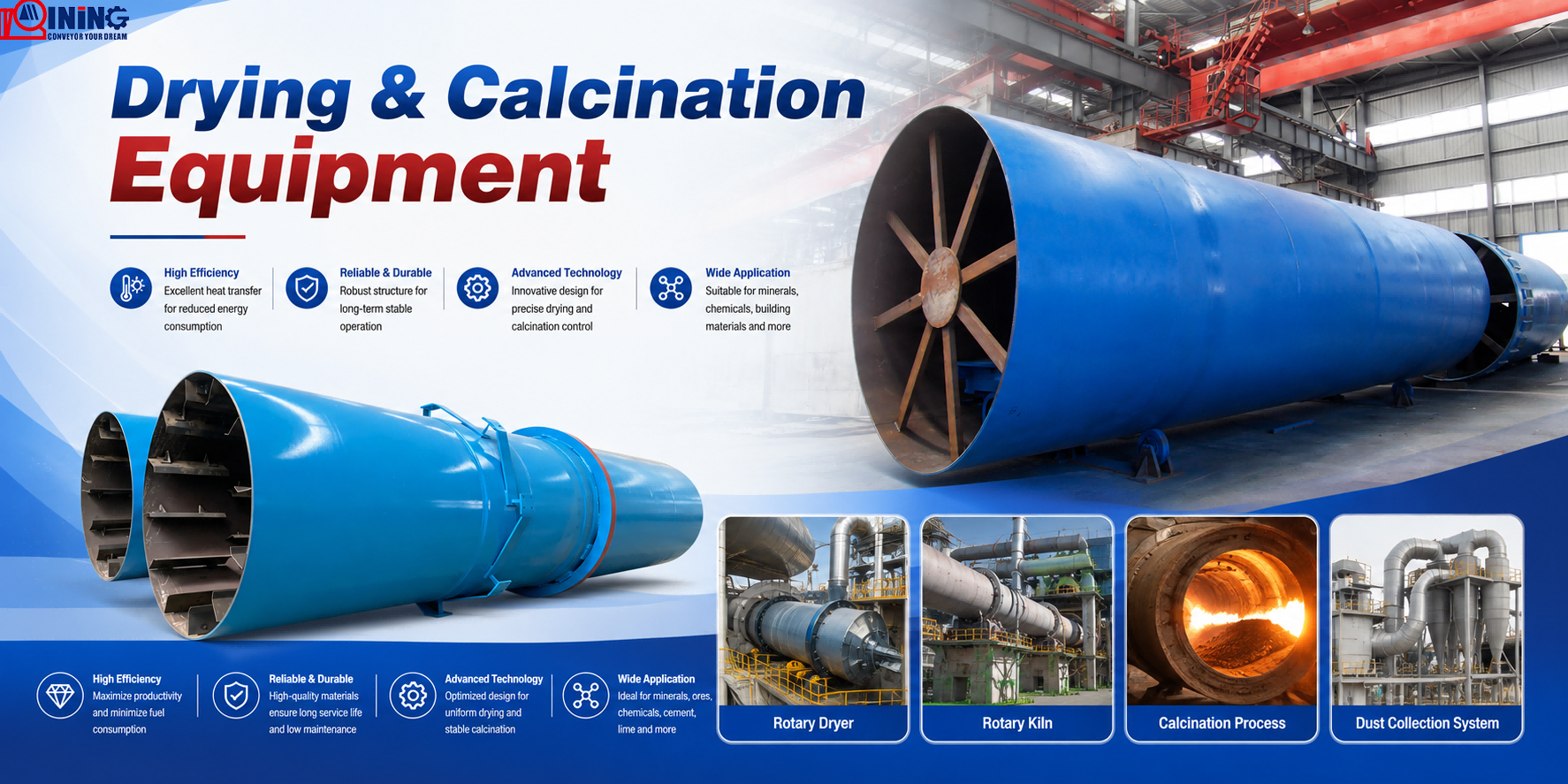
Silica sand drying generates significant dust. A well-designed dust collection system—typically a cyclone followed by a bag filter or wet scrubber—is mandatory to meet emission standards and recover fines.
Energy Efficiency Features
Look for:
Proper insulation to reduce heat loss.
Variable frequency drive (VFD) on the drum drive to adjust rotation speed.
Heat recovery from exhaust gases, if feasible.
Automatic temperature control to prevent over-drying.
3. Types of Rotary Dryers for Silica Sand
Single-Pass Rotary Dryer: Simple, robust, and widely used. Best for high-capacity operations.
Three-Pass Rotary Dryer: Compact design with three concentric cylinders. It offers higher thermal efficiency and a smaller footprint, but is more complex to maintain.
Indirect Rotary Dryer: Used when contamination must be avoided. Suitable for high-purity silica sand.
For most silica sand applications, a single-pass direct rotary dryer offers the best balance of performance, reliability, and cost.
4. Sizing and Specifications
To size a rotary dryer correctly, you need to calculate:
Water evaporation rate (kg/h)
Required heat input (kJ/h)
Air volume (m³/h)
Drum dimensions: Diameter and length are determined by the residence time needed for drying.
Drive power: Based on the total weight of the drum, material, and internals.
A reputable manufacturer will use specialized software to simulate the drying process and recommend the optimal dimensions.
5. Common Mistakes to Avoid
Undersizing the dryer: Leads to insufficient drying and reduced output.
Oversizing: Wastes energy and increases capital cost.
Ignoring abrasiveness: Results in premature wear and frequent maintenance.
Inadequate dust control: Causes environmental issues and product loss.
Poor temperature control: Can damage the material or create fire hazards.
6. Maintenance and Operation Tips
Regularly inspect and replace wear liners.
Lubricate bearings and drive components according to the manual.
Monitor exhaust gas temperature to optimize fuel consumption.
Keep the dust collection system clean and functional.
Train operators to respond to abnormal conditions promptly.
Conclusion
Choosing the right rotary dryer for silica sand processing is a critical decision that affects product quality, operating costs, and environmental compliance. By understanding your material, evaluating key selection criteria, and working with an experienced dryer manufacturer, you can ensure a reliable, efficient, and long-lasting drying solution.
If you are planning a silica sand drying project, contact our engineering team today. We will help you select the ideal rotary dryer for your specific requirements and provide a customized solution that maximizes your return on investment.